Persistent Oral Infections
Doctor In-Charge: Dr Christine Ma
The mouth has a remarkable ability to heal, but when an infection continues to return or does not fully resolve, it is often a sign that something is interfering with the healing. Persistent oral infections may be linked to dental problems, lifestyle factors, medical conditions, or a combination of several contributing factors.
At kohe™ Dental, we take a holistic approach to identifying the root cause of recurring infections. By understanding the factors that may be affecting your oral health, we come up with personalised treatment plans that are effective and targeted.
What are Persistent Oral Infections?
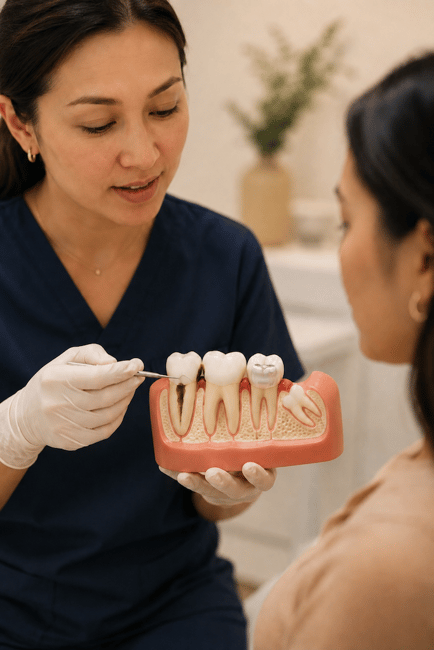
Persistent oral infections occur when bacteria, fungi, or other microorganisms continuously cause inflammation and infection within the mouth despite the body’s natural healing processes. This often indicates an underlying problem that has not been resolved. If left untreated, these issues could lead to serious health complications.
Signs & Symptoms
You may be experiencing persistent oral infections if you notice any of the following symptoms:
Recurring Swelling
Persistent Pain or Discomfort
Pus or Discharge
Persistent Bad Breath
Concerned About Your Symptoms?
What Causes Persistent Oral Infections?
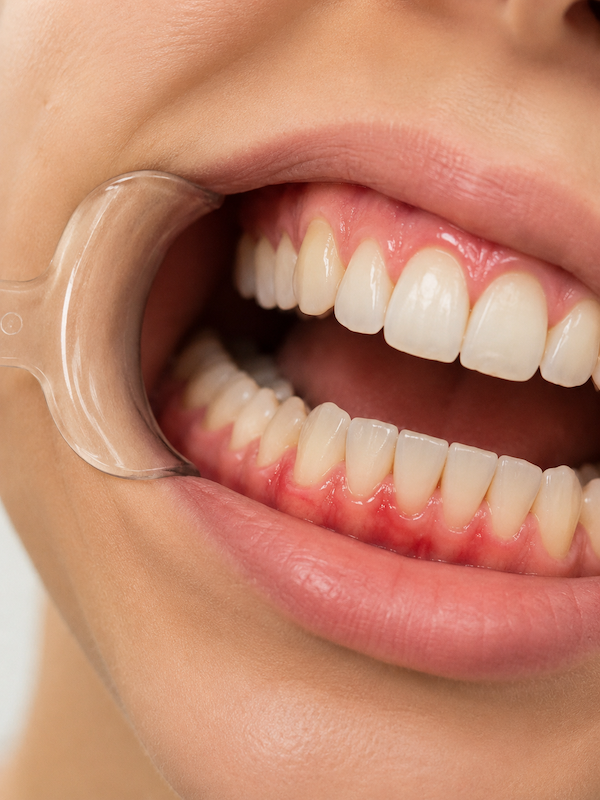
Persistent oral infections rarely occur without reason. While the main cause of an infection is usually bacteria, persistent infections indicate unresolved underlying issues that cause the infection to return. Identifying the root cause of the infection helps to determine the best treatment plan, reduces the risk of future infections and supports long-term oral health.
- An untreated tooth decay or dental abscess allows bacteria to enter the inner part of the tooth and cause an infection that may persist or repeatedly flare up if left untreated.
- Gum disease causes bacterial buildup around and beneath the gums, which can lead to persistent infections.
- Impacted or partially erupted wisdom teeth that are difficult to clean can trap food and bacteria, resulting in infections.
- Dry mouth increases the risk of oral infections as saliva is essential for protecting the mouth from harmful bacteria.
- Conditions and lifestyle habits, such as diabetes, smoking, chronic stress, and poor nutrition, can weaken the body’s natural ability to fight off infections.
Why Persistent Oral Infections Should Not Be Ignored
At first, an oral infection may seem like a problem that will resolve on its own. However, if left untreated, what started as a small infection may develop into more serious oral health issues as the infection can spread to surrounding teeth and gums. An ongoing infection may lead to gum recession, bone loss and gum disease. As the infection progresses, treatment may become more complicated, time-consuming, and expensive than it would have been if the issue had been diagnosed early.
How Does kohe™ Dental Assess Persistent Oral Infections?
Care That Starts With You
An effective treatment plan begins with understanding the actual cause of the infection. During your consultation at kohe™ Dental, our experienced dental team will conduct a complete assessment of your oral health, physical health, existing medical conditions and lifestyle to determine the root cause of the problem. This helps us create a targeted treatment plan that prevents future infections from happening again.
Your consultation begins with a discussion with your dentist where you share your concerns, symptoms and overall health. You may be asked when you first noticed the symptoms, how often it occurs and whether it has returned after previous treatment. Your dentist will also review your medical history, medications, and lifestyle factors that may influence your oral health.
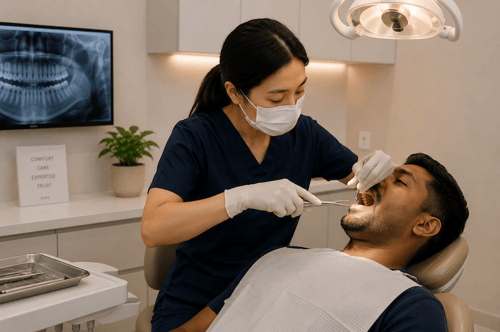
Next, your dentist will carefully examine your teeth, gums, tongue, cheeks and other oral tissues. This is to identify any signs of infection, swelling, inflammation, pus or areas that are not healing normally.
Following that, we evaluate your teeth for decay, previous root canal treatment, impacted wisdom teeth, and existing restorations such as crowns and fillings. This helps us to identify if any of these issues could be the cause of infection.
Dental X-rays may be recommended for a more detailed assessment of areas within the mouth that cannot be seen during a visual examination. If necessary, CBCT scans may be required to gain a deeper understanding of the teeth, jawbone, or surrounding structures.
Persistent oral infections can also be caused by dry mouth, mouth breathing, smoking, nutrition, stress and oral hygiene habits. Furthermore, certain medical conditions, such as diabetes and immune system disorders, may also increase the risk of recurring infections or delayed healing. Understanding and evaluating all these factors helps us to create an effective treatment plan that addresses the root cause of the inflammation, not just the symptoms.
Once the assessment is complete, your dentist will explain the findings in clear, easy-to-understand language. We discuss the likely causes of your inflammation and how they may be affecting your oral health. A personalised treatment plan will then be developed to address both the infection and its underlying causes, helping to support long-term oral health and reduce the risk of future recurrence.
Treatment Options
Guided Biofilm Therapy (GBT)
Root Canal Treatment
Tooth Extraction

Addressing Underlying Contributing Factors
Frequently Asked Questions
Do you have questions about metal and dental material sensitivity? Here are the most common questions we receive from our patients.
The right treatment option for your infection depends on the underlying cause of your infection, which is best determined by an experienced dentist.
Some common options include:
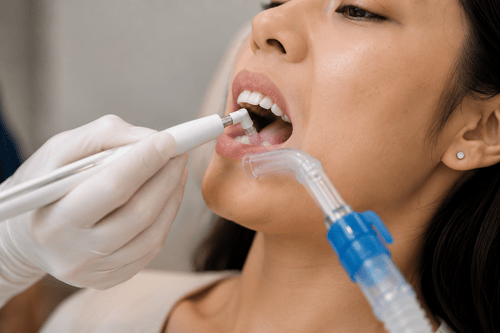
- Guided Biofilm Therapy (GBT)
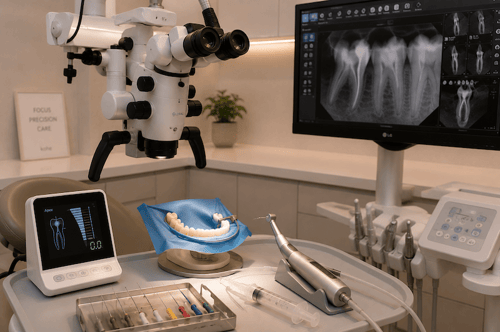
- Root canal treatment
- Tooth extraction
- Wisdom tooth removal
- Addressing contributing factors such as dry mouth, mouth breathing, smoking or underlying medical conditions
Our Holistic Dentist
Dr Christine Ma is a UK-trained holistic and biological dentist that takes a holistic approach to dentistry.
.png?width=1023&height=1280&name=Dr%20Christine%20Ma%20(1023%20x%201280).png)
Dr Christina Ma
Why Visit Dr Christine Ma
- Holistic and biological dentist with a focus on working with conditions experienced by:
- Pregnant women,
- Children who have material sensitivities,
- Patients with medical conditions or allergies and,
- Patients who have had previous bad dental experiences.
- UK-trained dentist who has worked in the United Kingdom for more than 10 years in both public and private service.
- More than 10 years of experience working with biomimetic and minimally invasive dentistry.
- Works with patients who want to correct their oral health in relation to their physical (systemic health).