Failed Dental Implants
Doctor In-Charge: Dr Christine Ma
Dental implants are built to last a lifetime. However, in some cases, dental implants can fail. This may be due to factors such as infection, bone loss, excessive biting forces, or other underlying issues. A failed dental implant can cause pain, discomfort, inflammation or a feeling of looseness around the implant site. Recognising the signs early and seeking professional assessment can help prevent these symptoms from worsening.
At kohe™ Dental, we take a holistic approach to implant failure by understanding the root cause. Instead of defaulting to implant removal, our priority is to determine whether the implant can be predictably preserved. By carefully assessing your symptoms, we develop a personalised treatment plan that is effective and targeted to preserve the longevity of your implant.
What are Failed Dental Implants?
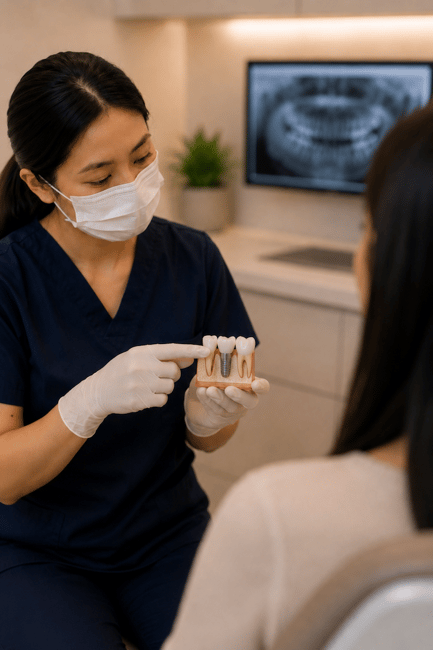
A failed dental implant occurs when an implant does not successfully integrate with the jawbone or becomes loose after functioning well for some time. Implant failure can occur before the implant has fully healed and bonded with the bone, or months or years after successful placement. Failure may involve the implant itself, the surrounding bone, the gums, or other supporting structures that help keep the implant stable and healthy.
However, not all implant complications require immediate removal. In some cases, where failure is diagnosed early, the appropriate treatment can solve the issue before the implant fails completely.
Signs & Symptoms
Your dental implants may be failing if you experience the following symptoms:
Pain or Discomfort Around the Implant
Swollen, Red, or Bleeding Gums
Loose or Unstable Implant
Pus, Bad Breath, or an Unpleasant Taste
Concerned About Your Symptoms?
What Causes Failed Dental Implants?
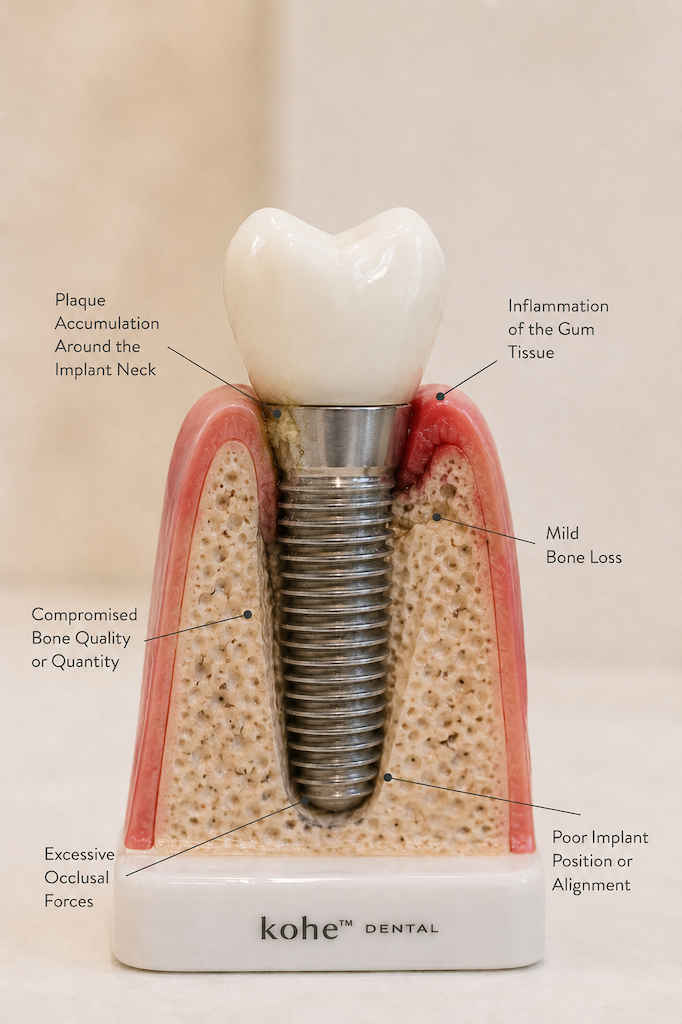
Dental implants have a very high long-term success rate. However, as with all medical treatments, complications may occasionally arise. Implant failure rarely occurs due to a single factor and is usually a result of multiple issues. Understanding the most common causes of implant failure can help identify problems early and improve the chances of successful treatment.
- Bacterial infection of the gums and bone surrounding the implant can cause key support structures to break down over time, leading to implant failure. This is also known as peri-implantitis.
- Inadequate cleaning around the implant allows bacteria to accumulate at the implant site. This leads to an increased risk of inflammation and infection.
- Smoking reduces blood flow to the gums, slows healing, and significantly increases the risk of implant complications and failure.
- Insufficient bone support due to long-term tooth loss, advanced gum disease, infection, trauma or bone resorption may hinder implant integration, thus causing it to lose stability over time.
- Clenching, grinding, or excessive pressure on the implant places stress on the implant and surrounding bone, which increases the risk of long-term failure.
Why Failed Dental Implants Should Not Be Ignored
When you first begin to notice possible signs of implant failure, it may be easy to dismiss them as a problem for next time. However, ignoring these signs could lead to more serious issues such as progressive bone loss, increased risk of infection, implant loss, gum reccession and more complex and costly treatment required later. It is highly recommended that you consult a dentist when you first notice the symptoms. Early diagnosis and treatment provide the best opportunity to address the underlying problem and prevent the issue from deteriorating.
How Does kohe™ Dental Assess Failed Dental Implants?
Care That Starts With You
An effective treatment plan begins with understanding the actual cause of implant failure. During your consultation at kohe™ Dental, our experienced dental team will conduct a comprehensive assessment of your oral health, existing medical conditions and lifestyle to determine the root cause of the problem. This helps us create a targeted treatment plan that gives you the best chance of preserving the implant, restoring your oral health and preventing future complications.
Your consultation begins with a discussion with your dentist where you share your concerns, symptoms and overall health. You may be asked about your implant treatment history, when you first noticed the symptoms, how often they occur and whether they have worsened over time. Your dentist will also review your medical history, medications, and lifestyle factors such as diet and smoking that may affect your oral health.
Next, your dentist will carefully examine the implant and the surrounding gums, bone and tissues for signs of inflammation, infection, recession or implant stability. The health of the surrounding teeth and supporting structures will also be evaluated to gain a complete understanding of your oral health.
Your dentist will also assess how the implant functions during everyday activities such as biting and chewing. This includes evaluating your bite alignment, chewing patterns, and any signs of teeth grinding or clenching that may be putting excessive pressure on the implant. Implant-supported crowns, bridges, or dentures will also be examined to ensure proper function.
Dental X-rays may be recommended for a more detailed assessment of areas within the mouth that cannot be seen during a visual examination. This helps your dentist to assess bone levels around the implant, detect hidden infections, evaluate implant positioning and identify areas of bone loss. If necessary, a CBCT scan may be required for a more detailed 3D view of the implant position, bone support, surrounding anatomical sutures and extent of bone loss.
A failed dental implant may also be caused by inappropriate oral hygiene habits, smoking, existing gum disease and medical conditions that may affect healing. You will be carefully evaluated for these factors so that we can gain a complete understanding of your overall health and recommend the right treatment option.
Once the assessment is complete, your dentist will explain the findings in clear, easy-to-understand language. We discuss the likely causes of your dental implant failing and how it might be affecting your oral health. A personalised treatment plan will then be developed, focusing on preserving the implant wherever possible. We will also suggest a long-term plan to reduce possible future complications.
Treatment Options
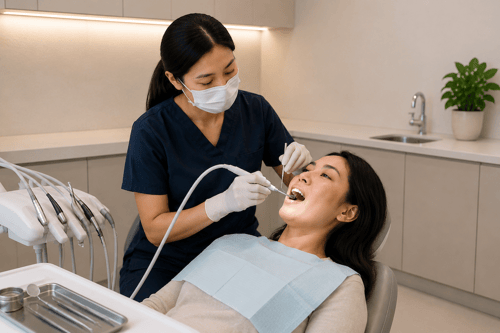
Professional Implant Cleaning and Infection Management
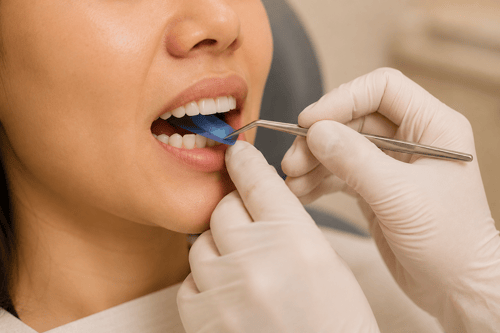
Bite Adjustment and Implant Restoration Repair
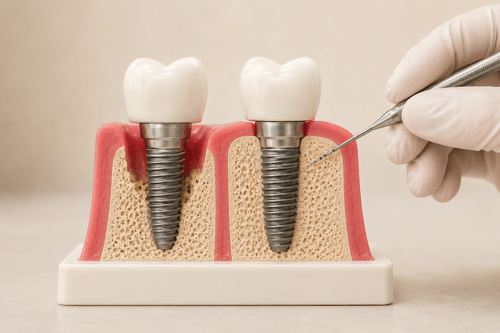
Surgical Treatment and Bone Regeneration Procedures
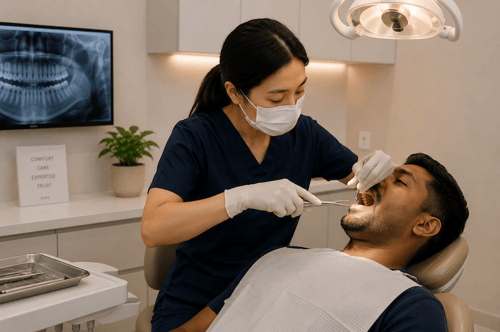
Implant Removal and Replacement
Frequently Asked Questions
Do you have questions about failed dental implants? Here are the most common questions we receive from our patients.
If left untreated, a failed dental implant may result in infection and bone loss around the implant site, which could deteriorate over time. This can eventually lead to implant loss, damage to surrounding tissues, and more complex treatment such as bone grafting or implant replacement.
In many cases, yes. A failed dental implant can be removed and replaced once the area has healed. Depending on the amount of bone loss suffered, a bone graft may be required before a new implant can be placed.
Our Holistic Dentist
Dr Christine Ma is a UK-trained holistic and biological dentist that takes a holistic approach to dentistry.
.png?width=1023&height=1280&name=Dr%20Christine%20Ma%20(1023%20x%201280).png)
Dr Christina Ma
Why Visit Dr Christine Ma
- Holistic and biological dentist with a focus on working with conditions experienced by:
- Pregnant women,
- Children who have material sensitivities,
- Patients with medical conditions or allergies and,
- Patients who have had previous bad dental experiences.
- UK-trained dentist who has worked in the United Kingdom for more than 10 years in both public and private service.
- More than 10 years of experience working with biomimetic and minimally invasive dentistry.
- Works with patients who want to correct their oral health in relation to their physical (systemic health).