


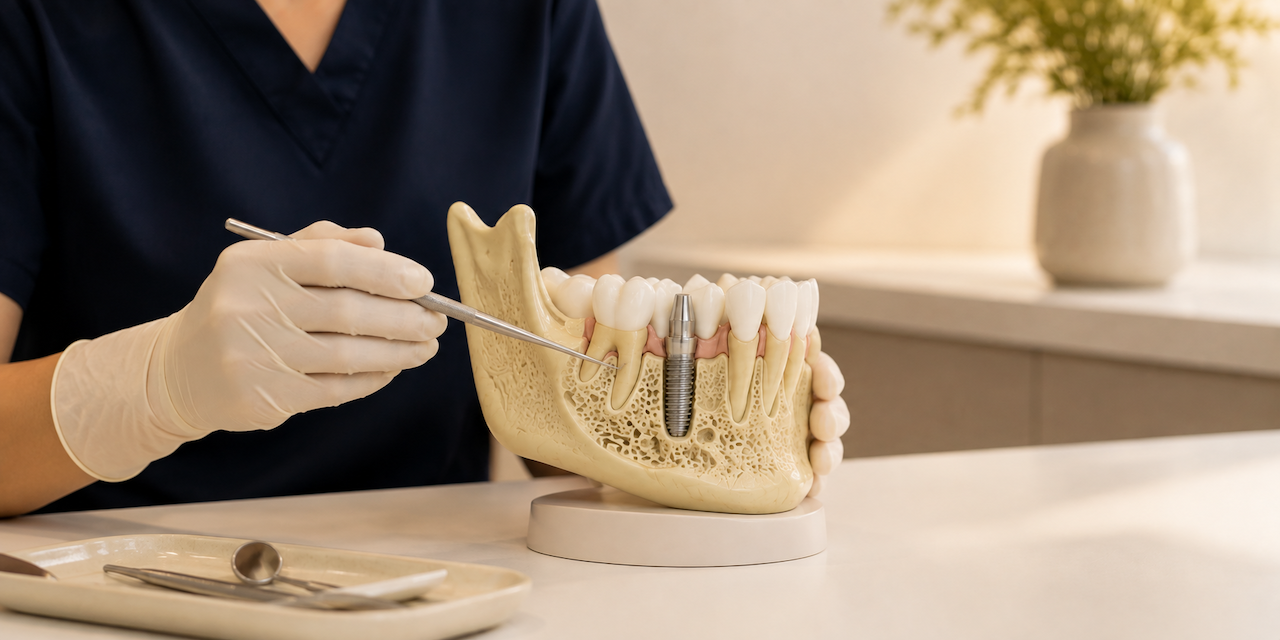
Titanium dental implants are built to last decades. However, there are some situations where the implant begins to cause problems and may require removal. Persistent discomfort, infection or loosening are potential signs of unresolved underlying issues that require attention.
However, experiencing these symptoms does not immediately indicate that a removal is necessary. Before making a recommendation, your dentist will first evaluate your symptoms and assess your teeth and gums to determine if the implant can be predictably saved.
In this guide, we take you through the entire titanium dental implant removal journey, from the initial consultation to the removal, recovery and what you can expect next.
Before Your Appointment
Preparing for your titanium dental implant removal consultation is an important step in ensuring that your appointment runs smoothly and that you make the most of your time with the dentist. While no extensive preparation is required, bringing the key information helps your dentist better understand your health and provide more personalised recommendations.
Before your appointment, we suggest the following:
- Bring along any previous dental records or X-rays that you might have. This allows your dentist to review your oral health history and avoid unnecessary repeat investigations.
- If possible, bring the necessary information on your titanium implant, such as:
- When the implant was placed
- Where the implant was placed
- Whether there were any complications during treatment
- Previous treatments performed around the implant
- Think about the symptoms that you have noticed, including when they started, whether they are getting worse and whether you have experienced pain, swelling or bleeding around the implant site
- Come up with a list of current medications and/or supplements you are taking, and inform your dentist of any relevant medical conditions
- Consider your long-term oral health goals. Being clear on this helps your dentist to recommend treatments that align with your needs and preferences.
- Write down any questions you might have so that you can direct them to your dentist during the consultation.
Consultation
Once you are comfortably settled, your holistic consultation begins with a conversation, not a clinical examination. Your dentist may ask about when the implant was placed, when your symptoms first appeared and whether you have previously received any treatment for the implant. This is also an opportunity to discuss any pain, swelling, bleeding, loosening or changes in your bite that you may have noticed.
Your dentist will also review your medical history, including any existing health conditions, medications or supplements that may affect the treatment. Next, if necessary, your dentist will ask about your lifestyle habits, such as smoking, diet, or teeth grinding, which could impact the health of your implant.
Most importantly, your dentist takes the time to understand your concerns and goals before deciding on whether removing the implant will be beneficial for your oral health.
Comprehensive Dental Examination
Following your consultation, your dentist will conduct a comprehensive dental examination to assess whether your existing titanium implant can be predictably saved or if a removal is necessary.
During the examination, your dentist may assess:
- The existing titanium implant: Your dentist checks if the implant is stable and assesses the condition of the restoration attached to it.
- The surrounding gums: The tissues around the implant are checked for signs of infection or inflammation, such as redness, swelling, bleeding, or gum recession.
- The surrounding teeth: Neighbouring teeth will be examined for decay, cracks, gum problems or other issues that could be contributing to your symptoms.
- Your bite: Your dentist will assess how your upper and lower teeth come together and how excessive biting forces may be placing stress on the implant.
This assessment helps your dentist to understand the overall condition of your oral health and determine whether further investigations are required.
Digital Imaging and Implant Planning
Digital imaging is particularly important for implant removal. This is because your dentist needs to understand what is happening beneath the gums, including the condition of the bone surrounding the implant and its position in relation to nearby structures. These images help your dentist determine the most appropriate approach to removing the implant while preserving as much healthy surrounding tissue as possible.
Depending on the patient, investigations may include:
- Dental X-rays
- 3D Cone Beam Computed Tomography (CBCT) Scan
- Intraoral photographs
- Digital scans of the teeth and bite (if necessary)
These images provide your dentist with a more detailed understanding of the existing implant and help them carefully plan your treatment. Your dentist can identify the position of important surrounding structures, check for signs of infection and determine how the implant can be removed while preserving as much healthy tissue as possible.
Deciding Whether the Implant Needs to Be Removed
Once your consultation and assessment are complete, your dentist will review all the information collected and determine whether removing your titanium dental implant is the most appropriate option for you.
Not every problem with a dental implant has to be solved with a removal. Depending on the underlying cause and the condition of the surrounding gums and bone, there may be situations where the implant can be retained, and the problem managed with other treatments. However, removal may be recommended if the implant can no longer be predictably maintained or if leaving it in place could further affect the surrounding oral structures.
Deciding on the right treatment is not a one-way process. It is a conversation between you and your dentist. Your dentist will explain their findings, walk you through the available treatment options and discuss the benefits and limitations of each approach. At the same time, if you have any questions or concerns, this would be a great time to share them. Together, you can decide on a treatment plan that supports your oral health and individual needs.
Your Titanium Implant Removal Procedure
Once your dentist determines that implant removal is an appropriate option and you wish to proceed, your implant removal treatment can be scheduled. Your dentist will explain what to expect beforehand and provide you with any instructions you may need to follow before the procedure.
Preparing the Treatment Area
Before the procedure begins, local anaesthesia will be applied to numb the treatment site and keep you comfortable. Depending on your existing restoration and the condition of the implant, the crown or other restoration attached to the implant may also be removed to allow your dentist to access the implant.
Removing the Titanium Implant
Your dentist then carefully removes the implant from the jawbone. If the implant is already loose, it may be more straightforward to remove. However, if it is firmly integrated with the jawbone, a more involved approach may be necessary.
Throughout the treatment, your dentist aims to retain as much healthy bone structure and gum tissue as possible. This is important, especially if you are considering a replacement implant in the future.
Cleaning the Area
Once the implant has been successfully removed, your dentist will clean the area and remove any inflamed or unhealthy tissue. This creates a healthier environment for healing before the next stage of your treatment plan.
What Happens After Implant Removal?
Once your implant has been removed, the next steps vary depending on each patient’s individual needs. In some cases, the area may be simply left to heal after removal. In other cases, additional treatment may be necessary to create a stronger foundation for future restoration.
Bone Grafting (If Required)
If there is significant bone loss around the implant site, a bone graft may be recommended to rebuild the area. Depending on the implant site, this may be carried out on the same day of the removal or at a later time.
Once the bone graft is complete, it is given time to heal and integrate with the surrounding bone before your dentist determines whether the area is ready for the next stage of treatment.
Healing and Recovery
Immediately after the procedure, you may notice some tenderness, swelling or mild discomfort. This is normal, and the symptoms usually settle within the next few days. The extent of your recovery depends on the complexity of the removal and whether additional procedures, such as bone grafting, were carried out.
Your dentist will also provide personalised aftercare instructions, which may include:
- Eating softer foods for the first few days
- Avoiding chewing directly over the treatment area
- Keeping the area clean as instructed
- Taking any prescribed or recommended medication
- Avoiding smoking as this can interfere with healing
Follow-Up Appointment
After your titanium implant removal, you will return to the clinic for a review appointment. During this visit, your dentist will assess the condition of the gums and surrounding tissues, look for any remaining signs of inflammation or infection and make sure that your recovery is on track.
If you are considering replacing the missing tooth, your dentist will monitor the healing and advise on an appropriate treatment timeline.
Your Long-Term Oral Health Journey
Removing a titanium implant is not necessarily the end of your treatment journey. Once the area has healed, the next step is to consider how best to restore the missing tooth while maintaining the health of the surrounding gums and bone.
At kohe™ Dental, we take the time to understand why your implant is causing problems, carefully assess the surrounding oral structures and develop a personalised treatment plan that considers both your immediate concerns and long-term oral health.
If you are experiencing persistent discomfort, swelling, loosening or other concerns around a titanium dental implant, book a holistic consultation with our team to have the implant properly assessed and discuss the treatment options available to you.