


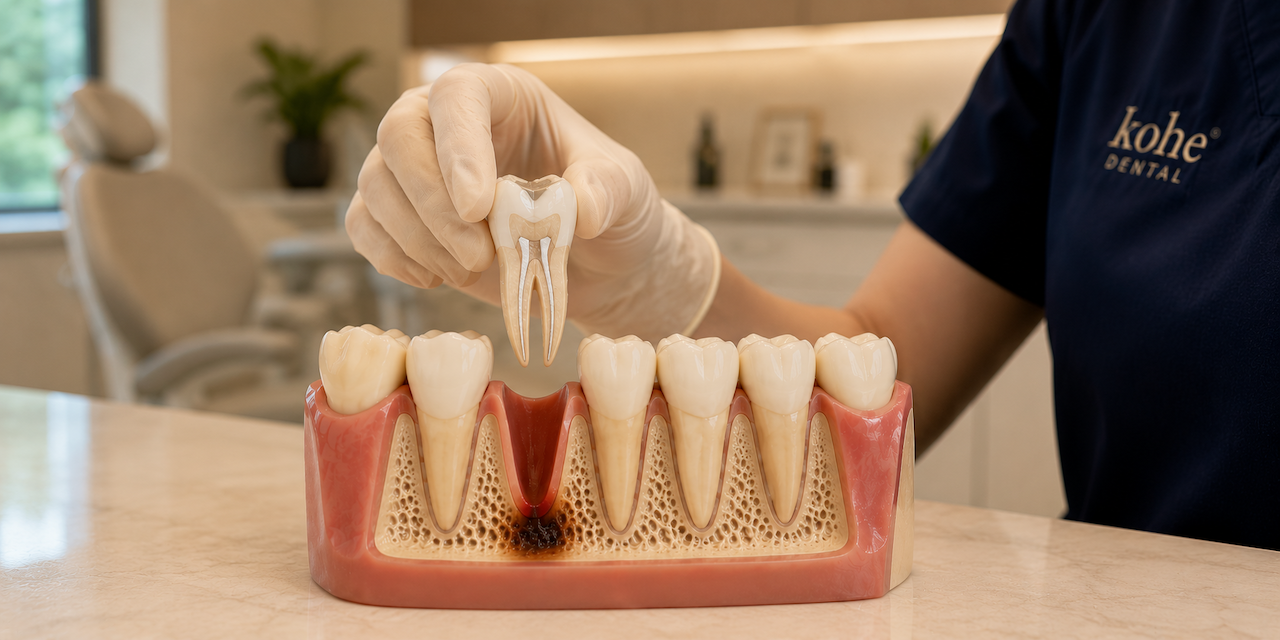
Root canal treatment is designed to save a natural tooth that may otherwise need to be removed. However, there are situations where a root canal-treated tooth continues to cause problems, such as persistent pain, recurring infection or a crack or fracture.
Experiencing these symptoms does not necessarily mean that the tooth needs to be removed. Before making a recommendation, your dentist will first assess the tooth and surrounding tissues to understand what is causing the problem and determine whether the tooth can still be predictably retained.
In this guide, we take you through the entire root canal-treated tooth removal journey, from your initial consultation and assessment to the removal procedure, recovery and what you can expect next.
Before Your Appointment
Preparing for your root canal-treated tooth removal consultation is an important step in ensuring that your appointment runs smoothly and that you make the most of your time with the dentist. While no extensive preparation is required, bringing the key information helps your dentist better understand your health and provide more personalised recommendations.
Before your appointment, we suggest the following:
- Bring along any previous dental records or X-rays that you might have. This allows your dentist to review your oral health history and avoid unnecessary repeat investigations.
- Prepare the necessary information on your original root canal treatment, including roughly when it was performed, the reason it was recommended and whether a crown or other restoration was placed afterwards.
- Think about the symptoms that you have noticed. They may include:
- Pain when chewing or biting
- Persistent aching
- Tenderness around the tooth
- Swelling of the gum or face
- Prepare a list of current medications and/or supplements you are taking, and inform your dentist of any relevant medical conditions.
- Consider your long-term oral health goals. Being clear on this helps your dentist to recommend treatments that align with your needs and preferences.
- Write down any questions you might have so that you can direct them to your dentist during the consultation.
Consultation
Once you are comfortably settled, your consultation begins with a conversation, not a clinical examination. Your dentist may ask about when the root canal was performed, what the original symptoms were and when the symptoms first occurred. This is also an opportunity to mention any pain when biting, tenderness, swelling or recurring infections you may have noticed.
Your dentist will also review any previous treatment carried out on the tooth, such as a crown, filling or root canal retreatment. Additionally, your dentist will also enquire about your medical history and current medications.
Most importantly, your dentist takes the time to understand your concerns and goals before deciding on whether removing the root canal-treated tooth will be beneficial for your oral health.
Comprehensive Dental Examination
Following your consultation, your dentist will conduct a comprehensive dental examination to assess whether your root canal-treated tooth can be saved or if removal is necessary.
During the examination, your dentist may assess:
- The root canal-treated tooth for tenderness, check whether there is pain when biting and look for visible cracks or fractures
- The gums around the tooth for signs of infection such as swelling, redness or a gum pimple
- The depth of the gum pockets around the tooth to determine if there are signs of periodontal disease
- The amount of healthy tooth structure remaining
- If the tooth is unusually loose
- Neighbouring teeth to rule out other possible sources of your symptoms
- Your bite to assess whether excessive bite forces are contributing to the symptoms
This assessment helps your dentist understand the overall condition of your oral health and determine whether further investigations are required.
Digital Imaging and Further Investigation
Digital imaging is particularly important in deciding whether a root canal-treated tooth should be removed. This is because your dentist needs to understand what is happening beneath the gums and around the roots of the tooth, which cannot always be seen during a visual examination.
Depending on the patient, investigations may include:
- Dental X-rays
- 3D Cone Beam Computed Tomography (CBCT) Scan
- Intraoral photographs
- Digital scans of the teeth and bite (if necessary)
These images, together with the findings from the clinical examination, give your dentist a clearer understanding of what may be causing your symptoms and whether your tooth can be predictably saved.
Deciding Whether the Root Canal-Treated Tooth Needs to Be Removed
Once your consultation and assessment are complete, your dentist will review all the information collected and determine whether removing your root canal-treated tooth is the most appropriate option for you.
Not every issue surrounding a root canal-treated tooth needs to be solved with an extraction. Depending on the condition of the tooth, there may be situations where the tooth can be retained. When deciding if the tooth should be removed, your dentist will evaluate the following factors:
- The underlying cause of the problem
- The amount of healthy tooth structure remaining
- The presence of cracks or fractures
- The condition of the surrounding bone and gums
- Whether any previous treatment was done
- Whether the tooth can be predictably restored
If your tooth can be saved, your dentist will discuss the possible options with you and share the possible benefits and limitations of each option. At the same time, if you have any questions or concerns, this would be a great time to share them. Together, you can decide on a treatment plan that supports your oral health and individual needs.
Removal of the Root Canal-Treated Tooth
Once your dentist determines that removal is an appropriate option and you wish to proceed, your removal treatment can be scheduled. Your dentist will explain what to expect beforehand and provide you with any instructions you may need to follow before the procedure.
Numbing the Area
Before the procedure begins, local anaesthesia will be applied to numb the treatment site and keep you comfortable. Your dentist will ensure that the area is adequately numb before starting the treatment. If you are experiencing any discomfort at this point, inform the dental team.
Carefully Removing the Tooth
Your dentist then carefully loosens and removes the tooth from its socket. The complexity of the extraction varies from patient to patient. Root canal-treated teeth can sometimes be more brittle due to a loss of tooth structure, large existing restorations or cracks or fractures. If the tooth cannot be safely removed in one piece, the dentist may need to divide it into smaller sections so each part can be removed carefully. The exact method of removal depends on the tooth and its root anatomy.
Throughout the treatment, your dentist aims to retain as much healthy bone structure and gum tissue as possible. This is important, especially if you are considering replacing the tooth in the future.
Cleaning the Site
Once the tooth has been successfully removed, your dentist will clean the area and remove any inflamed or unhealthy tissue. If necessary, stitches may be used to close the site and support the healing process.
What Happens After Removal?
Once the tooth has been removed, a blood clot naturally forms within the extraction socket. This clot is especially important during the early part of the healing process. What happens next depends on your individual needs and long-term treatment plan.
In some cases, the extraction site may be left to heal on its own. In other cases, if you are considering replacing the missing tooth, your dentist may recommend a bone graft to preserve and rebuild the bone in the area.
Healing and Recovery
Immediately after the procedure, you may notice some tenderness, swelling or mild discomfort. This is normal, and the symptoms usually settle within the next few days. The extent of your recovery depends on the complexity of the removal and whether additional procedures, such as bone grafting, were carried out.
Your dentist will also provide personalised aftercare instructions, which may include:
- Biting on gauze to control the initial bleeding
- Avoiding disturbing the extraction site
- Choosing soft foods only at the initial stages
- Chewing away from the treatment area
- Avoiding very hot food and drinks while the extraction site is numb
- Taking prescribed medication as directed
- Avoiding smoking as it interferes with the body’s natural ability to heal
- Avoiding strenuous activity for the initial period if advised
If you experience significant pain that does not improve over time, persistent bleeding, increased swelling or start developing a fever, contact your clinic immediately.
Follow-Up Appointment
After removing your root canal-treated tooth, you will return to the clinic for a review appointment. During this visit, your dentist will check whether the socket and gums are healing, assess whether the swelling has settled, remove stitches if necessary and check for signs of infection. If you are considering replacing the missing tooth, your dentist will monitor the healing and advise on an appropriate treatment timeline.
What Happens to the Missing Tooth?
Once the extraction site has fully healed, your dentist will discuss whether the missing tooth needs to be replaced and the options available to you. It is important to note that not every extracted tooth requires replacement. The decision depends on various factors such as the location of the tooth, your bite and your overall oral health.
If replacement is recommended, some options include:
- Dental implant: An implant is placed into the jawbone to support a replacement tooth without relying on the neighbouring teeth.
- Dental bridge: A fixed restoration that replaces the missing tooth with support from the neighbouring teeth.
- Removable denture: A removable restoration that can be used to replace one or more missing teeth.
- Leaving the space: Depending on the location of the missing tooth and the individual needs, leaving the space could be an appropriate option.
Your Long-Term Oral Health Journey
Removing a root canal-treated tooth is not necessarily the end of your treatment journey. Once the area has healed, your dentist will continue to consider the health of the surrounding gums, bone and neighbouring teeth, as well as whether replacing the missing tooth would be beneficial for you.
At kohe™ Dental, we take the time to understand why your root canal-treated tooth is causing problems and assess whether it can be predictably retained before recommending removal. If removal is necessary, we will work with you to develop a personalised treatment plan that considers both your immediate concerns and long-term oral health.
If you are experiencing persistent pain, swelling, tenderness or other concerns around a root canal-treated tooth, book a holistic consultation with our team to have the tooth properly assessed and discuss the treatment options available to you.