Impacted Wisdom Tooth Surgery
Doctor In-Charge: Dr Christine Ma
Impacted wisdom teeth are one of the most common dental problems in adults. When a wisdom tooth does not have enough space to erupt fully, it can become trapped beneath the gum or bone — leading to pain, infection, and damage to neighbouring teeth.
At kohe™ Dental, our experienced team provides thorough assessment and minimally invasive surgical removal, helping you resolve the problem with as little disruption as possible.
- Affordable and transparent pricing
- Experienced holistic dentist
- 24/7 patient support
Our Holistic Dentist

Dr Christina Ma
What Is An Impacted Wisdom Tooth?
Wisdom teeth are the third and final set of molars, right at the back of your mouth. They typically erupt between the ages of 17 and 25. Most adults have four wisdom teeth, one at each corner of the mouth. An impacted wisdom tooth is a tooth that does not have enough space to erupt fully or at the correct angle. The tooth may emerge at an angle, only partially break through the gum or remain completely trapped beneath the gum or bone.
Types of Impactation
- Soft tissue impaction: the tooth has cleared the jawbone but remains partially or fully covered by gum tissue
- Partial bony impaction: the tooth has partially emerged through the bone but cannot fully erupt
- Full bony impaction: the tooth is completely encased within the jawbone with no eruption through the gum
Types of Angulation
- Mesial (most common): angled towards the front of the mouth
- Distal: angled toward the back of the mouth
- Vertical: upright in position but unable to fully erupt
- Horizontal: lying completely on its side, pressing into the root of the adjacent tooth

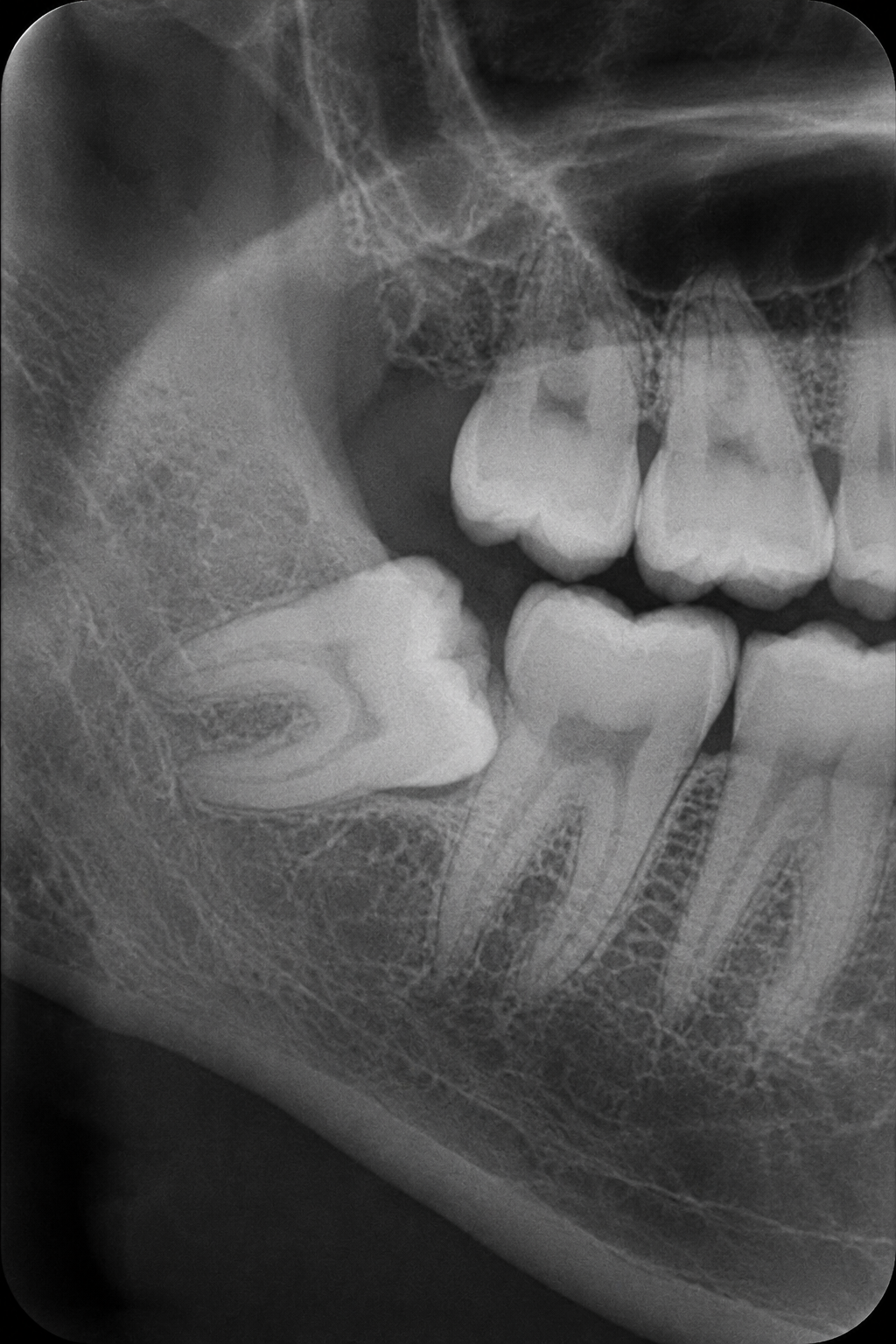
Signs of Impacted Wisdom Tooth
Impacted wisdom teeth can cause a range of symptoms, or none at all. Recognising the indicators early gives you the best chance of addressing the issue before it worsens.
You may have an impacted wisdom tooth if you experience any of the following symptoms:
- Pain and discomfort
- Aching or throbbing pain in the back of the jaw
- Pain that radiates to the neck, ear or temple
- Jaw soreness
- Headaches that are a result of jaw tension
- Gum-related signs
- Swollen, red or tender gums around the impacted tooth
- Bleeding gums when eating or brushing
- A flap of gum tissue partially covering the tooth
- Infection signs
- Bad breath or a persistent, unpleasant taste in the mouth
- Discharge or pus from the gum around the impacted tooth
- Swollen lymph nodes under the jaw or neck
- Adjacent tooth involvement
- Pain or sensitivity in the adjacent molars
- Visible damage or decay on the neighbouring teeth
Who Needs Impacted Wisdom Tooth Surgery?
Not every impacted wisdom tooth needs to be removed immediately. In some cases, taking a conservative watch-and-wait approach might be more appropriate, especially if the tooth is not causing any pain or discomfort. However, there are several situations where a timely extraction is crucial for the patient’s teeth and overall health. Your dentist will assess your individual situation and recommend removal only when it is clinically indicated.
If you experience any of the following symptoms, you may require surgery soon:
- Repeated infection of the gum tissue around the impacted wisdom tooth
- Persistent pain, swelling or discharge that does not resolve
- Decay or damage to the neighbouring molars that is caused by the wisdom tooth pressing against them
- Cyst formation around the impacted tooth
- Resorption of the adjacent tooth root from sustained pressure
Close monitoring may be appropriate if:
- The impacted wisdom tooth does not show any symptoms and is not affecting the second molar
- Surgical risks outweigh the benefits, especially in older patients
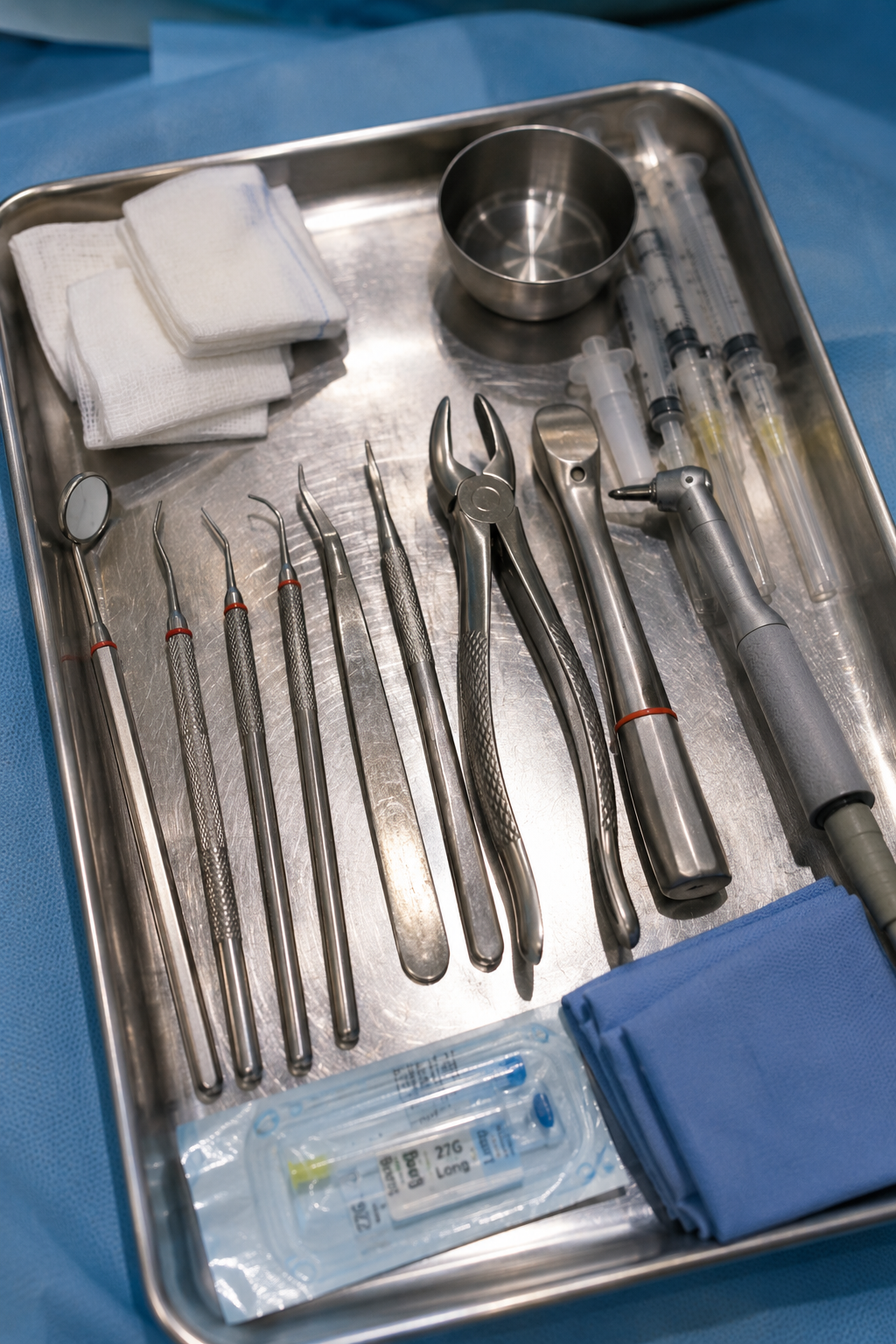
Impacted Wisdom Tooth Surgery Process
Care That Starts With You
Impacted wisdom tooth surgery is one of the most commonly performed surgeries in dentistry. The process typically takes two visits, with an initial consultation followed by the extraction itself. If necessary, a third appointment may be made for a review of the extraction.
At kohe™ Dental, the process is carried out with care and precision at every stage. From your initial consultation to your post-operative recovery, our team will guide you through every step so you feel confident and informed from the very beginning.
Your treatment journey begins with an in-person consultation at the kohe™ Dental Aesthetics Dedicated Centre located in the heart of Orchard Road. During this visit, you will meet your dentist and discuss your concerns and goals in detail. A comprehensive assessment, including dental X-rays or an OPG (orthopantomogram), will be done to evaluate the tooth’s position and angulation.
After evaluating your teeth and oral health, your dentist will share their findings and create a customised treatment plan, detailing the treatment timeline and expected costs. If your dentist finds that the tooth is too close to a nerve, an oral maxillofacial surgeon will be brought in to carry out your surgery.
On the day of the extraction, local anaesthesia will be administered to numb the extraction site. If necessary, patients with dental anxiety may request sedation. Once you are comfortable, a small incision is made in the gum tissue to expose the tooth and bone. Depending on the type of impaction, some bone may need to be carefully removed to reach the tooth. In complex cases, the tooth may be divided into smaller pieces for ease of removal. Once the tooth has been removed, the site is thoroughly cleaned, and the incision is closed with dissolvable sutures.
Before leaving the clinic, your dentist will provide you with post-operative care instructions.
Approximately two weeks later, you will return to the clinic for your review appointment. During this session, your dentist will check on your healing progress and remove any non-dissolvable sutures. If there are any issues, such as prolonged swelling or pain, your dentist will address them immediately.
Post-Operative Care and Recovery
Recovery from impacted wisdom tooth removal is different for everyone, but most patients can return to normal activities within two to three days. Knowing how to care for your surgical site and what to expect will make the healing process significantly easier to manage.
First 24 hours
Bite down gently on gauze to control bleeding
Avoid spitting, rinsing, or using a straw to protect the blood clot
Apply an ice pack to the jaw in 20-minute intervals to bring down the swelling
Rest and avoid vigorous activities
Days 2-7
Mild swelling and bruising are expected and typically subsides within the first 48 hours
Consume the prescribed antibiotics and painkillers as directed by your dentist
Stick to soft foods like porridge and soup
Avoid hard, sticky foods, hot drinks, alcohol and smoking
Rinse gently with warm salt water after meals
When to call the clinic
Intense pain that starts three to five days after the surgery
Increasing pain, swelling, fever or discharge beyond the first few days
Bleeding that does not subside
Difficulty swallowing or persistent numbness in the lip, chin or tongue beyond 24 hours
Cost of Impacted Wisdom Tooth Surgery
The final cost of impacted wisdom tooth surgery varies from patient to patient. Factors that impact the price of the treatment may include the type of impaction, the number of teeth, and the type of sedation.
At kohe™ Dental, the price of impacted wisdom tooth surgery starts from $1,420 ($1,547.80 with 9% GST). For more information on the treatment cost, book an appointment or WhatsApp kohe™ Dental to receive a personalised quote.
Impacted Wisdom Tooth Surgery: Frequently Asked Questions
The procedure generally takes between 30 and 60 minutes, depending on the complexity of the impaction. Soft tissue impactions are generally more straightforward and require less time, while full bony impactions are more complex and require more time.
The procedure is carried out under local anaesthesia, so you should not feel any pain during the extraction. Some pressure and movement are normal. Once the anaesthesia wears off, mild to moderate discomfort is expected for the first few days. This can be managed with painkillers.
Patients with dental anxiety or high pain sensitivity may request sedation during the procedure.
The symptoms are at their worst during the first two to three days after extraction. The swelling peaks after 48 hours, then gradually subsides over the following days. Full tissue healing takes approximately two to four weeks, while bone remodelling continues for several months.
It is highly recommended to follow a soft diet during the first week after your extraction. This includes foods like porridge, soup, yoghurt, and mashed vegetables. Avoid hot food and drinks, hard and crunchy foods, alcohol and smoking until the extraction site has healed.
Surgical extraction of impacted wisdom teeth is claimable under Medisave in Singapore, subject to prevailing CPF Board guidelines and claim limits. Your dentist will be able to advise on the claimable amount at your consultation.
Impacted Wisdom Tooth Surgery Knowledge Base
Explore articles on impacted wisdom tooth surgery, why patients choose this treatment and what the process involves at kohe™ Dental.